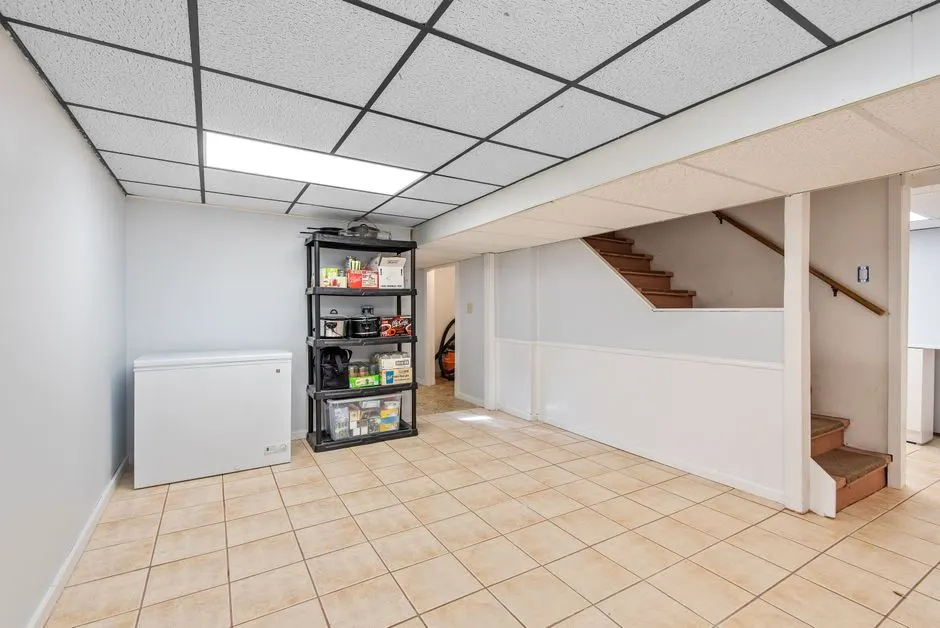
To insulate a basement ceiling for soundproofing, you need to block airborne noise with dense insulation and break the structural path that lets impact noise travel through the floor joists. In South Ogden, where many homes have unfinished basements with exposed joists, the right combination of mineral wool, resilient channels, and a second layer of drywall can cut footstep noise by 50% or more. This guide walks you through the materials, installation steps, and costs so you can decide whether to tackle it yourself or bring in a pro.
Why basement ceiling noise happens
Noise travels from upstairs to your basement in two ways: airborne sound (voices, TV, music) and impact sound (footsteps, dropped objects, furniture scraping). Airborne noise moves through the air gaps in your ceiling assembly, while impact noise vibrates directly through the floor joists and subfloor. Standard fiberglass batts alone won't stop impact noise because they don't interrupt the structural connection. To truly reduce noise through basement ceiling in South Ogden Utah, you need to address both paths.
Most South Ogden homes built before 1990 have 2x10 or 2x12 floor joists spaced 16 inches on center, with a subfloor and finished hardwood or carpet above. That assembly acts like a drum. Adding mass (insulation plus extra drywall) and decoupling (resilient channels) are the two proven strategies. If you're also dealing with cold floors in winter, floor insulation South Ogden UT can help with both thermal and acoustic performance.
How do I insulate a basement ceiling for soundproofing in South Ogden?
You insulate a basement ceiling for soundproofing by filling the joist cavities with a dense, sound-absorbing material, sealing air gaps, and then adding a resilient layer that separates the ceiling drywall from the joists. The process takes 1-2 days for a typical 500-square-foot basement ceiling. Here's the sequence:
- Seal air leaks first. Use acoustic caulk around wire penetrations, plumbing, and ductwork. Air gaps let sound through even if you add insulation later.
- Install insulation. Fit mineral wool or fiberglass batts tightly between the joists. For impact noise, consider adding a layer of mass-loaded vinyl (MLV) or a second layer of drywall with Green Glue.
- Add resilient channels. These metal strips decouple the drywall from the joists, breaking the vibration path. Space them 16 inches on center, perpendicular to the joists.
- Hang drywall. Use 5/8-inch drywall for extra mass. Seal all seams with acoustic sealant.
If you're not ready to tear out the ceiling, you can still get decent results by filling the joist bays with insulation and adding a drop ceiling with acoustic tiles. That won't stop heavy impact noise, but it will muffle conversation and TV sound. Many homeowners in Insulation in Downtown South Ogden start with this approach because it's less invasive.
What insulation is best for basement ceiling soundproofing in Utah?
Mineral wool (also called rockwool) is the best all-around insulation for basement ceiling soundproofing in Utah because it's dense, fire-resistant, and handles moisture better than fiberglass. It has a higher density (around 8 lb/ft³ for acoustic panels) which blocks sound better than standard fiberglass batts. Fiberglass is cheaper and works fine for airborne noise, but it compresses easily and doesn't add much mass. For the best results, combine mineral wool with a decoupling layer.
Here's a quick comparison of common options:
- Mineral wool batts: Best sound absorption, mold-resistant, $0.80-$1.50 per sq ft installed.
- Fiberglass batts: Budget-friendly, decent for airborne noise, $0.50-$1.00 per sq ft.
- Spray foam: Excellent air sealing, adds some mass, but expensive and not ideal for DIY. We offer spray foam insulation South Ogden UT for homeowners who want a professional-grade seal.
- Mass-loaded vinyl (MLV): Thin, heavy, great for impact noise, $1.50-$3.00 per sq ft.
For a typical 500-square-foot basement ceiling, expect to spend $400-$1,200 on materials alone in 2026. Professional installation with resilient channels and drywall can run $2,500-$5,000 depending on ceiling height and access.
Step-by-step installation
Installing basement ceiling insulation for soundproofing is a job you can do yourself if you're comfortable with basic carpentry and have a helper. Work safely: wear gloves, eye protection, and a respirator when handling mineral wool or fiberglass.
Tools and materials
- Mineral wool or fiberglass batts (enough to fill joist bays)
- Resilient channels and 1-5/8-inch screws
- Acoustic caulk and backer rod
- 5/8-inch drywall and drywall screws
- Utility knife, tape measure, drill, and a drywall lift (rental)
Step 1: Prep the ceiling
Clear the basement area. Turn off power to any fixtures you'll be working around. Inspect joists for rot or pest damage. If you see moisture issues, fix those first - wet insulation loses its acoustic value. If you're dealing with old, degraded insulation, our insulation removal South Ogden UT service can clear it out before you start fresh.
Step 2: Seal and insulate
Run a bead of acoustic caulk around all penetrations. Cut batts 1/2-inch wider than the joist spacing for a friction fit. Press them into place so they touch the subfloor above. Don't compress the insulation - that reduces performance.
Step 3: Install resilient channels
Screw resilient channels perpendicular to the joists, 16 inches on center. Use the shortest screws possible so you don't hit the subfloor. These channels are the key to stopping impact noise.
Step 4: Hang drywall
Hang 5/8-inch drywall on the channels. Stagger seams and seal them with acoustic caulk. For extra mass, add a second layer with Green Glue between the sheets. This adds about $1.50 per sq ft but can improve sound reduction by another 5-10 dB.
Common mistakes to avoid
The biggest mistake is skipping the air sealing step. Even a small gap around a pipe can let through as much noise as a missing batt. Another common error is compressing insulation to make it fit - that kills its acoustic properties. Don't use standard drywall screws for resilient channels; they can short-circuit the decoupling. And don't forget to insulate around recessed lights and ductwork, which are common noise leaks.
If you're also dealing with noise from outside, consider window insulation South Ogden UT to tighten up those gaps. And if your basement ceiling is already finished, you can still add soundproofing by installing a second layer of drywall with Green Glue or using acoustic panels on the surface.
When to call a professional
Call a professional if you have a finished ceiling with no access, if you're uncomfortable working overhead, or if you need a guaranteed result for a home theater or music room. Our team at Coolshift Assembly handles basement ceiling soundproofing across South Ogden and can assess your space, recommend the right materials, and install them so you get the quiet you want. We also offer soundproof insulation South Ogden UT for walls and ceilings. If you're in the Shadow Valley area, we regularly work in Insulation in Shadow Valley and know the local building styles.
Frequently Asked Questions
How do I insulate a basement ceiling for soundproofing in South Ogden?
Fill joist bays with mineral wool or fiberglass batts, seal all air gaps with acoustic caulk, then add resilient channels and 5/8-inch drywall. This combination blocks both airborne and impact noise. For best results, use a second layer of drywall with Green Glue.
What insulation is best for basement ceiling soundproofing in Utah?
Mineral wool is the top choice because of its density and moisture resistance. Fiberglass is a cheaper alternative for airborne noise. For impact noise, add mass-loaded vinyl or a decoupling layer. In Utah's dry climate, mineral wool also resists mold better than fiberglass.
Does basement ceiling insulation reduce noise in South Ogden?
Yes, it reduces airborne noise by 50-80% and impact noise by 20-40% when installed correctly with decoupling. Without decoupling, insulation alone mainly muffles voices and TV sound but won't stop footsteps. Expect a noticeable improvement, especially in older homes.
Can I soundproof a basement ceiling myself in South Ogden?
Yes, if you're comfortable with basic carpentry and have a helper. The job takes 1-2 days for a 500-square-foot ceiling. You'll need mineral wool, resilient channels, drywall, and acoustic caulk. Budget $400-$1,200 for materials. If you lack access or want a guaranteed result, hire a pro.
Who installs basement ceiling soundproofing near South Ogden?
Coolshift Assembly installs basement ceiling soundproofing in South Ogden and surrounding areas. We handle everything from material selection to final inspection. Call us at (855) 927-7517 to schedule a consultation. We also offer insulation installers near me South Ogden UT for other insulation needs.
Get help with Insulation in South Ogden
If you're ready to stop hearing every step from upstairs, our team at Coolshift Assembly can help. We'll assess your basement ceiling, recommend the right soundproofing materials, and install them so you can enjoy a quieter home. Call us at (855) 927-7517 to get started.